
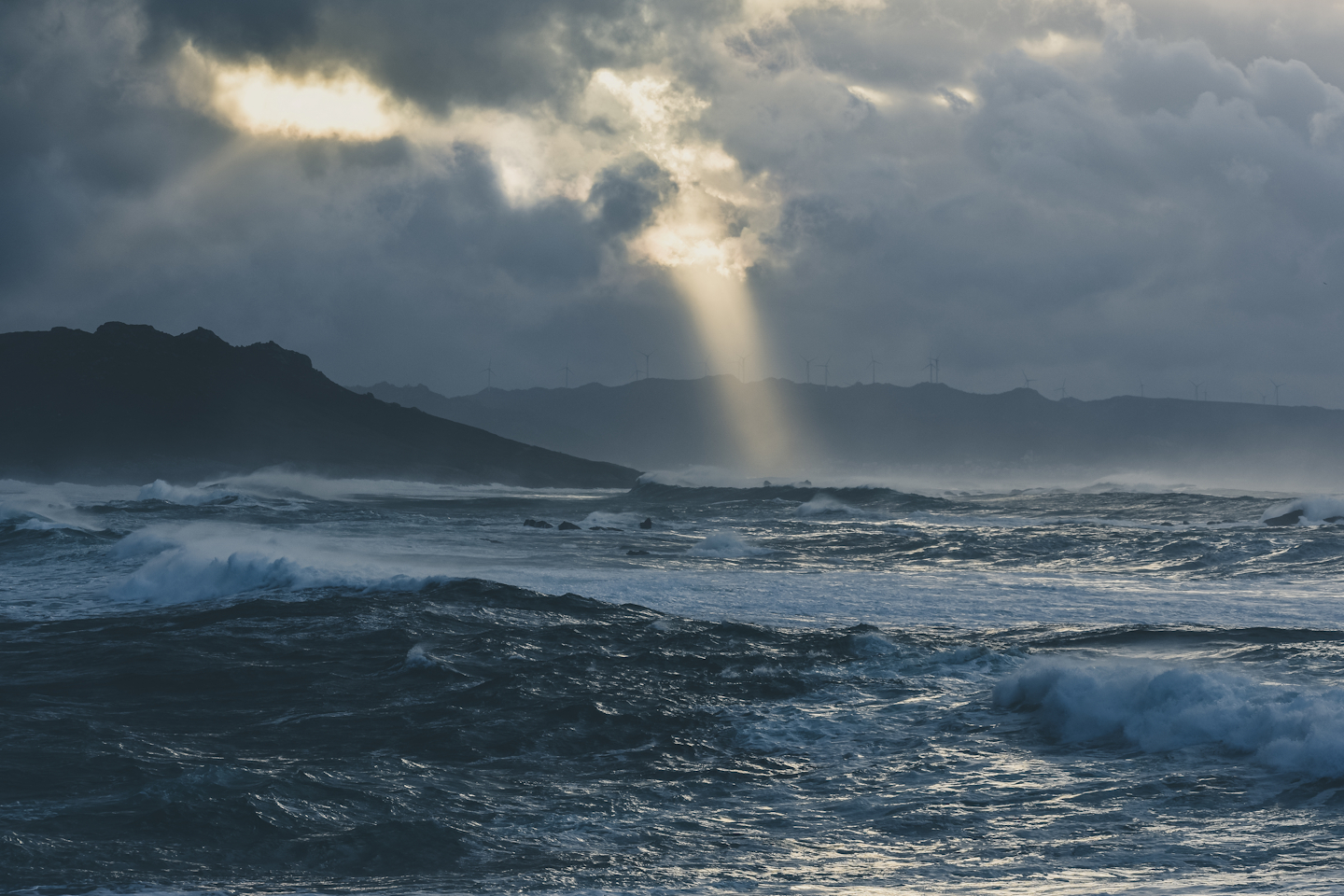
Heavy weather avoidance is often described as a navigational decision, but that description is too small for what it really is. In modern shipping, it is a strategic operating choice that sits at the intersection of safety, cost control, regulatory discipline, and commercial credibility. A vessel does not merely pass through weather. It passes through a moving field of risk, and every decision about speed, heading, or deviation affects not only the next few hours of the voyage but the condition of the ship, the safety of the people on board, the integrity of the cargo, and the economics of the entire passage.
That is why the real question is never simply whether to avoid bad weather. The real question is how to make that decision within a framework that is disciplined enough to protect the vessel and flexible enough to preserve voyage efficiency. The best operators do not treat weather avoidance as a last-minute reaction. They treat it as an integral part of voyage optimization, where seamanship and commercial judgment are expected to work together rather than against each other.
This is where many discussions go wrong. They assume that safety and efficiency exist on opposite sides of the table, as if one can be gained only by surrendering the other. In practice, the relationship is far more intelligent than that. Optimization is not the art of forcing the vessel through the shortest route. It is the art of selecting the most effective route once the sea, the weather, the machinery, the charter obligations, and the arrival window are all considered together. A route that is slightly longer on the chart may be safer, cheaper, cleaner, and more predictable in reality.
The sea punishes linear thinking. A vessel pushing into head seas at schedule speed may burn disproportionately more fuel, expose the hull and machinery to repeated stress, increase crew fatigue, and still arrive later because the original plan ignored how resistance escalates in adverse conditions. By contrast, an early and measured deviation may reduce rolling, preserve propulsive efficiency, stabilize engine load, protect cargo, and improve the accuracy of arrival forecasts. What looks like a detour can become the most economical decision of the voyage.
Safety remains the non-negotiable boundary. That point matters because commercial shipping is full of pressure that arrives in subtle forms. It may appear as a laycan concern, a berth window, a charter expectation, or the unspoken belief that delay is always failure. Yet the Master’s responsibility is not to defend a schedule at any cost. The Master’s responsibility is to bring the vessel, crew, and cargo through the voyage within safe operating limits. SOLAS voyage planning principles and the ISM framework exist precisely because maritime operations need a formal barrier between prudent judgment and short-term pressure. Safety is not one variable among many. It is the outer limit within which all other variables must operate.
That limit becomes very real in heavy weather. In head seas, slamming can drive vertical loads well beyond what calm-water thinking would suggest. In beam seas, rolling can become severe enough to threaten lashings, induce cargo shift, and increase torsional stress. In following seas, steering challenges and broaching tendencies can appear with very little warning when wave and vessel dynamics begin to interact unfavorably. None of this is theoretical. The vessel’s design, loading condition, GM, ballast distribution, trim, draft, and structural state all shape how much environmental stress can be accepted before the risk moves from tolerable to unacceptable.
The human element is just as important. A technically sound ship can still be operating in an unsafe condition if the crew is exhausted. Heavy weather elevates bridge workload, disrupts sleep, increases physical strain, and turns routine onboard movement into a source of injury risk. Under those conditions, judgment can become narrower and more reactive. Schedule pressure makes this worse, not better. Fatigue and commercial pressure together create the kind of decision environment in which avoidable mistakes become more likely.
Cargo risk belongs in the same calculation. Containerized cargo is vulnerable to rolling-induced lashing overload. Bulk cargoes may become more dangerous when motion and moisture interact over time. Tankers face sloshing effects in certain conditions and tank configurations. A single weather decision can therefore have consequences far beyond fuel burn. Cargo claims, operational disruption, legal exposure, and reputational damage may exceed by a wide margin whatever bunker cost the operator hoped to save by pressing on. This is one reason serious voyage planning requires more than meteorology. It requires consequence awareness.
Even the weather data itself must be handled with humility. Forecasting has improved enormously, but it remains a probabilistic discipline. Storm tracks shift. Wave models do not always capture local extremes. Confidence deteriorates as the time horizon lengthens. A professional weather avoidance strategy therefore asks not only how severe the weather may become, but how certain the forecast really is. Uncertainty is itself a risk factor. When forecast confidence is weak, conservatism becomes a rational operating choice rather than an overly cautious one.
This is also why modern voyage optimization is so valuable when used properly. Good routing support does not merely show where the weather is. It integrates forecast data with currents, speed-power curves, resistance behavior, and expected arrival implications. It helps decision-makers understand how a vessel will perform inside a weather pattern, not just where that pattern is located. The distinction matters. A ship does not experience a forecast as an abstract map. It experiences it through motion, load, fuel burn, steering response, and machinery stress.
The economics follow naturally. Heavy weather increases resistance, often sharply. Attempting to maintain high speed in those conditions can push fuel consumption upward at a rate that destroys the commercial logic of the original plan. Emissions performance suffers as well, particularly when inefficient routing produces high power demand with little operational benefit. In that sense, weather avoidance is not separate from efficiency strategy. It is efficiency strategy when it is done well. A slightly longer route under better conditions may cut total consumption, support environmental performance, and reduce the risk of delay caused by damage or technical trouble.
Machinery reliability is part of the same story. Propeller emergence in severe pitching, fluctuating loads, vibration, and prolonged stress on auxiliaries all impose costs that may not appear immediately in the voyage accounts. But those costs accumulate over time. Repeated exposure to conditions that could have been avoided can accelerate wear, increase maintenance burden, and shorten the useful operating life of critical equipment. The same logic applies to the hull itself. A merchant vessel is not consumed in one voyage, but it is shaped by every voyage. Heavy weather decisions therefore belong not only to navigation and operations, but also to lifecycle asset preservation.
That is where governance becomes decisive. Masters need the authority to deviate early when risk is rising, and they also need the confidence that prudent judgment will be supported ashore. If company policy is vague, the burden of commercial interpretation falls onto the bridge at exactly the moment when clarity is most needed. Strong operators do the opposite. They define thresholds, escalation paths, reporting expectations, and documentation standards in advance. They make it clear that schedule performance matters, but never beyond the safety envelope. Transparent governance reduces hesitation, and reduced hesitation often prevents bad weather from becoming an operational crisis.
In the end, the strongest heavy weather strategy is not based on bravado or routine avoidance. It is based on disciplined trade-off analysis inside firm safety limits. It recognizes that the shortest route can be the most expensive one, that delay can sometimes be the cheapest outcome available, and that a voyage plan is only intelligent when it respects both the power of the sea and the operational reality of the ship. Heavy weather avoidance is not a retreat from efficiency. It is the place where safety, cost control, and professional seamanship become the same decision.